


Introduction
In the vast, stateless expanse of the desert, where survival was precarious and external authority absent, the Bedouin governed themselves through a powerful, unwritten social contract known as the Bedouin Code. This was not a single document but a deeply ingrained set of principles that dictated every aspect of life, from conflict resolution to the treatment of guests. Centered on the core pillars of honor (sharaf), hospitality (Al Dhiafa), and community (Al Jama’a), this code provided a moral and ethical framework that ensured order, cooperation, and the preservation of human dignity in one of the world’s most challenging environments.
History
The Bedouin Code, or Al Urf (customary law), evolved over centuries as a practical response to the demands of desert life. In the absence of a central government, the tribe was the state, and this code was its constitution. It was upheld by tribal elders and enforced through social consensus and the threat of ostracization or blood feud. A man’s reputation and his family’s honor were his most valuable possessions, and any violation of the code brought shame not only upon himself but upon his entire lineage. This system was remarkably effective, maintaining a complex society where a person’s word was their bond, and a stranger’s safety was guaranteed.
Key Features
The Bedouin Code was built on several non-negotiable principles:
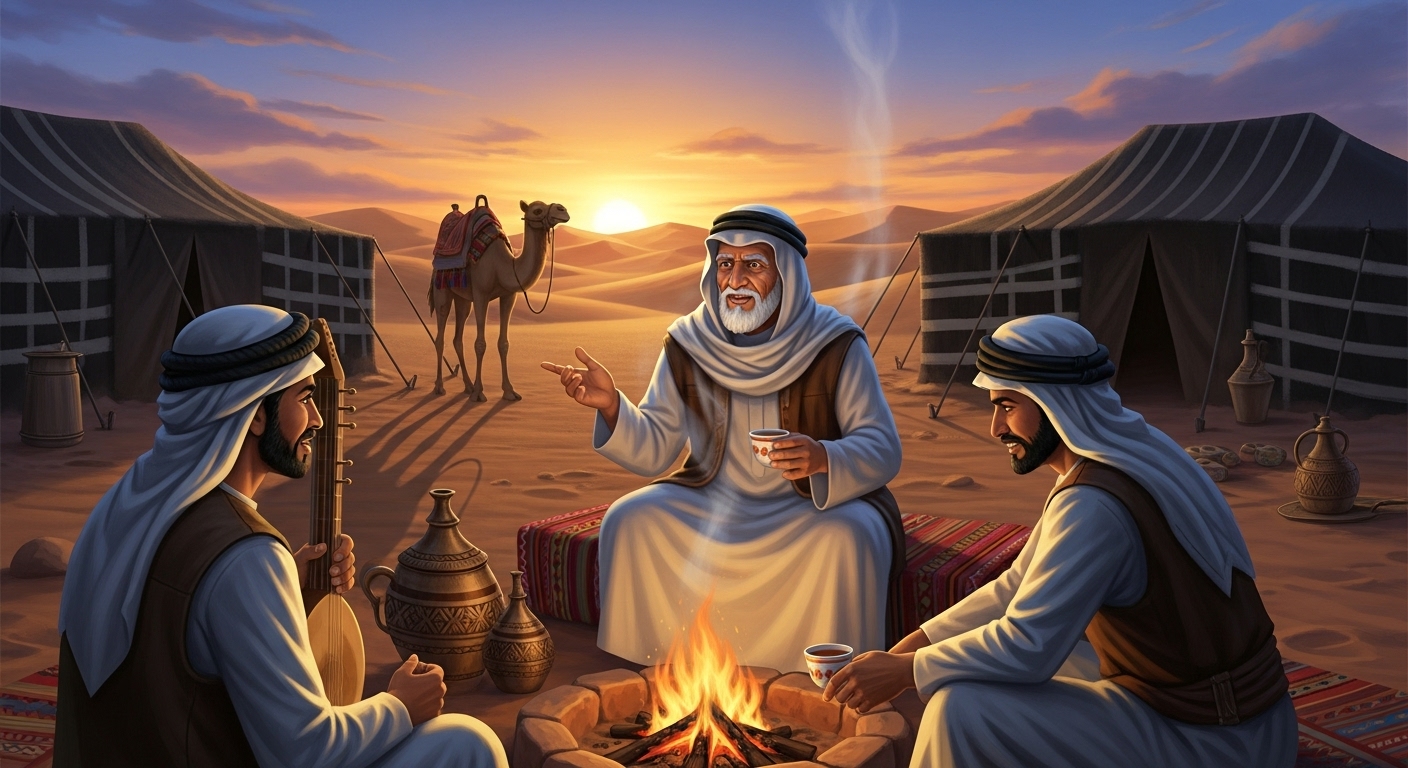
- Hospitality (Al Dhiafa): This was the most sacred duty. Any person, even an enemy, who approached a tent was entitled to three days of food, shelter, and protection without any questions asked. The host was obligated to offer the best of what he had, often sacrificing a valuable sheep or goat to honor the guest.
- Honor (Sharaf): Honor was multifaceted. It included courage in battle, fidelity to one’s word, protecting the weak, and defending the honor of the women in one’s family. An insult to one’s honor demanded a response to avoid being seen as weak.
- Community and Cooperation (Al Aouna): Survival depended on mutual aid. Tasks like well-digging, herding, and setting up camp were collective efforts. The community was responsible for supporting its vulnerable members, including widows, orphans, and the poor.
- Conflict Resolution (Sulh): The code provided intricate mechanisms for resolving disputes, often through mediation by respected elders. The goal was not punishment but the restoration of social harmony, often achieved through the payment of blood money (diyah) or a formal reconciliation ceremony.
Cultural Significance
The Bedouin Code was the soul of the desert society. It transformed a potentially anarchic environment into a place where trust and cooperation could flourish. It cultivated a culture where generosity was a measure of a person’s worth and where individual interests were subordinated to the well-being of the group. This code created a distinct personality—proud, resilient, fiercely independent, yet bound by deep obligations to others. It was the glue that held the tribal structure together and the moral compass that guided interactions in a world without borders or police.
Modern Relevance
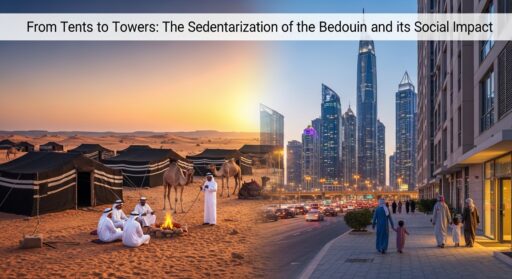
The principles of the Bedouin Code continue to be the ethical foundation of the modern UAE, seamlessly integrated into the state’s identity and policies. The nation’s renowned hospitality is visible in its status as a global hub for tourism and business, and in its role as a major humanitarian aid donor. The emphasis on honor and keeping one’s word underpins the UAE’s reputation as a reliable and trustworthy international partner. The value placed on community is reflected in the government’s comprehensive social welfare system, which ensures a high standard of living for all citizens, modernizing the traditional duty of caring for the tribe. While the law is now codified in a modern judicial system, the underlying cultural preference for mediation and reconciliation (sulh) remains strong.
Conclusion
The Bedouin Code is far more than a historical curiosity; it is the living heritage of the UAE. The skyscrapers of Dubai and the ministries of Abu Dhabi are run according to modern management principles, but the spirit that animates them is ancient. It is a spirit that values a person’s word, that opens its doors to the world, and that believes in the strength of the collective. In a rapidly globalizing world, these timeless values of honor, hospitality, and community provide the UAE with a stable and distinct cultural identity, proving that the deepest wisdom of the desert remains as relevant today as it was a thousand years ago.