

Introduction
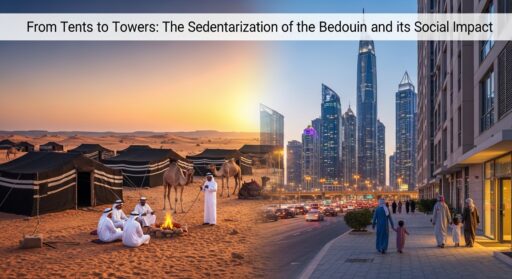
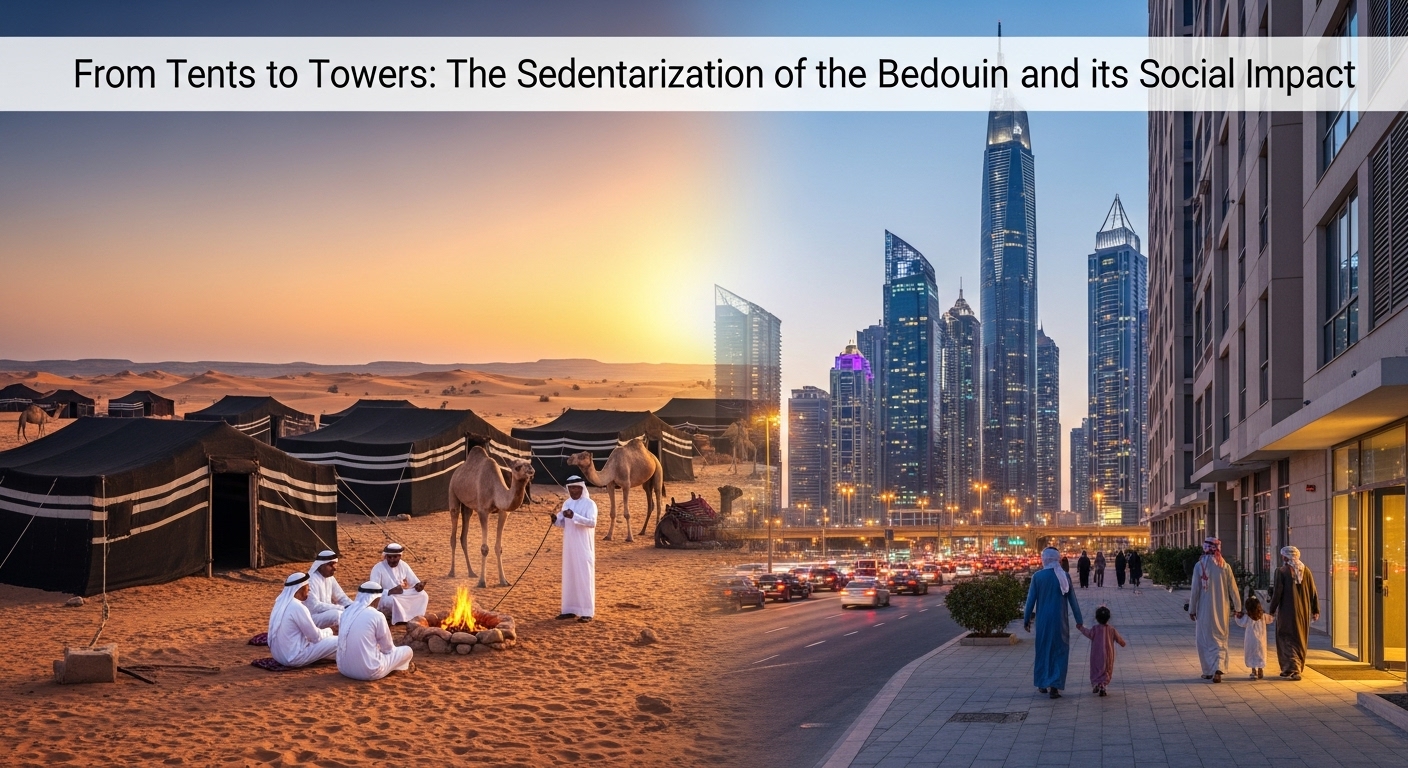
The transformation of the United Arab Emirates in the latter half of the 20th century is one of the most rapid and profound societal shifts in human history. At its heart was the process of sedentarization—the transition of the majority Bedouin population from a life of nomadic pastoralism to a settled, urban existence. This move “from tents to towers,” orchestrated by the state and fueled by oil wealth, brought unprecedented material prosperity but also triggered a complex social revolution. It reshaped family structures, gender roles, economic activities, and the very concept of community, creating a new, modern Emirati identity almost overnight.
History
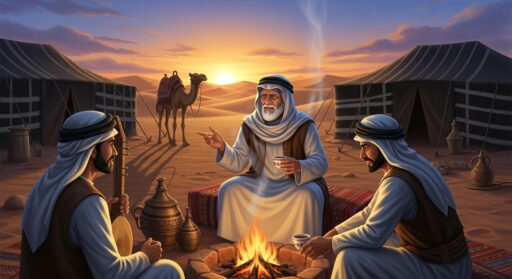
The process of sedentarization began in earnest after the formation of the UAE in 1971. The new federal government, under the leadership of Sheikh Zayed bin Sultan Al Nahyan, made it a primary policy to provide every citizen with a modern home, piped water, electricity, and access to education and healthcare. For the Bedouin, this was an irresistible offer. The harshness of desert life, with its constant uncertainty and scarcity, was replaced by the security and comfort of concrete houses in newly established towns and cities. This transition was not a gradual evolution but a state-driven, wholesale change that was largely completed within a single generation.
Key Features
The shift from a nomadic to a settled life involved dramatic changes across all aspects of society:
- Spatial and Economic Shift: The move from a mobile, pastoral economy to a fixed, wage-based one was fundamental. Men traded herding for jobs in the government, military, and emerging private sector, while women, who were once central to the economic production of the tent, found their domestic roles redefined within a modern household.
- The Nuclear Family: The extended tribal family, which lived and migrated as a single unit, began to give way to the nuclear family model, living in individual villas and apartments. This altered the dynamics of authority and socialization.
- Education and Healthcare: The universal provision of formal education and modern healthcare led to a dramatic increase in literacy and life expectancy, but it also transferred knowledge and authority from tribal elders to state-run institutions.
- Loss of Traditional Knowledge: The intricate knowledge of desert survival—navigation, animal husbandry in arid conditions, and herbal medicine—began to fade as it was no longer necessary for daily life.
Cultural Significance
The social impact of this transition was immense and dual-edged. On one hand, it liberated people from the grueling physical demands and uncertainties of desert life, offering a level of material comfort and security previously unimaginable. It created a unified national citizenry with a shared stake in the modern state. On the other hand, it led to a degree of cultural dislocation. The loss of the open desert as a daily living space and the confinement to urban environments created a sense of nostalgia and, for some, a feeling of alienation. The deep, experiential connection to the land was replaced by a more symbolic and recreational one.
Modern Relevance
The UAE government has been highly conscious of the potential cultural losses associated with sedentarization. This awareness has driven a massive investment in cultural preservation. The establishment of heritage villages, the promotion of traditional sports like camel racing and falconry, and the inclusion of Bedouin history in school curricula are all deliberate efforts to maintain a connection to the past. The modern Emirati identity is a conscious synthesis: it embraces global modernity while actively curating its Bedouin heritage. The challenge for contemporary society is to integrate the positive aspects of tribal life—such as its strong community bonds and respect for elders—into the fabric of a fast-paced, globalized urban culture.
Conclusion
The journey from tents to towers is the central narrative of modern Emirati society. It was a necessary and largely benevolent transformation that lifted a population out of hardship. However, it was not a simple trade of hardship for comfort; it was a fundamental reordering of social and cultural life. The success of the UAE lies in its ability to manage this transition with remarkable foresight, ensuring that the values of the desert—resilience, hospitality, and community—were not left behind in the abandoned camps, but were carefully carried forward to serve as the moral compass for a nation racing towards the future.