

Introduction
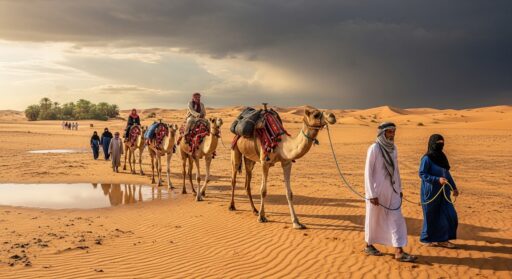
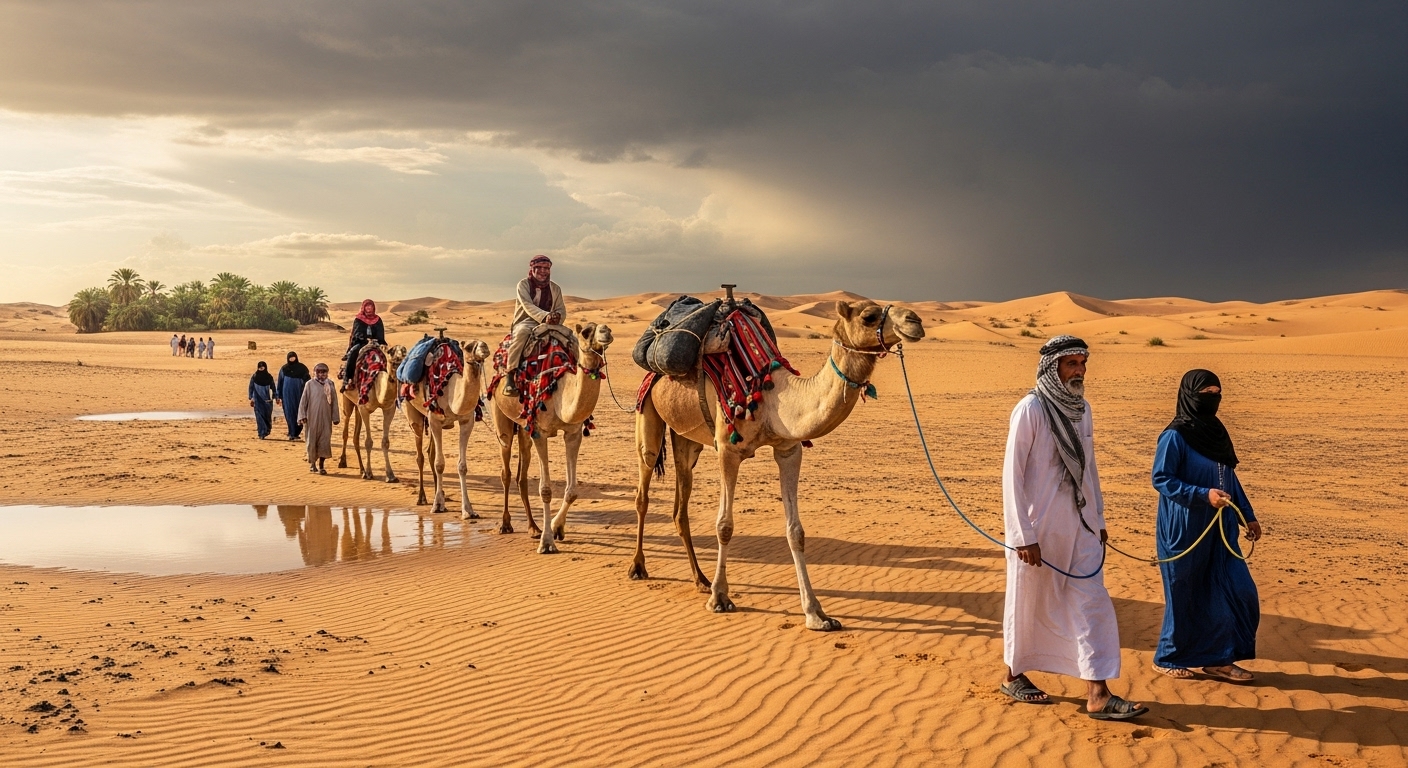
The rhythm of life for the Bedouin of the UAE was not dictated by clocks or calendars, but by the rain. In an environment where water was life itself, the entire social and economic structure was organized around the seasonal pursuit of this precious resource. The annual migration cycle, known as rahala, was a complex, pre-ordained dance across the desert, a strategic movement between predictable sources of water and grazing that ensured the survival of both people and livestock. This deep knowledge of the land and its subtle cues was the ultimate expression of the Bedouin’s intimate partnership with their environment.
History
For centuries, the Bedouin tribes of the region followed a well-established migratory route that was passed down through generations. This knowledge was a form of tribal capital, as vital as the herds themselves. The pattern was largely binary, oscillating between the interior desert and the coastal plains. The timing and direction of movement were not arbitrary; they were based on a sophisticated understanding of desert ecology, weather patterns, and the flowering cycles of specific plants that indicated recent rainfall. These routes and the rights to specific wells (bir or aïn) and pastures (maraa) were governed by strict customary law (Al Urf), and trespassing on another tribe’s territory could lead to serious conflict.
Key Features
The migratory cycle was a year-round strategy for survival:
- Winter (Al Sheta): The cooler, wetter winter months were spent in the deep desert, particularly the vast Rub’ al Khali (Empty Quarter). Winter rains would trigger the growth of ephemeral plants, creating temporary, lush pastures for the herds.
- Spring (Al Rabee): This was the peak of the grazing season. Tribes would disperse across the desert, taking advantage of the widespread vegetation. This was a time of plenty and relative ease.
- Summer (Al Seif): As the scorching summer heat intensified and water sources in the interior dried up, the great migration towards the coast began. Coastal areas, influenced by higher humidity and the possibility of the Al Kaus rain, offered more reliable, though still scarce, water and forage.
- Autumn (Al Kharif): The autumn season, potentially bringing rains from the Indian monsoon, could see some movement back towards the interior if conditions permitted, preparing for the cycle to begin again.
Cultural Significance
The practice of rahala was the crucible in which core Bedouin values were forged. The constant movement fostered a profound sense of resilience, adaptability, and patience. It reinforced the importance of community and collective action, as the entire tribe moved, lived, and worked as a single unit. The knowledge required for successful migration—reading the stars for navigation, identifying edible plants, and tracking animals—was a source of great pride and a key component of a young person’s education. This deep, generational knowledge of the land created an unbreakable bond between the people and their environment, a relationship built on respect and intricate understanding rather than domination.
Modern Relevance
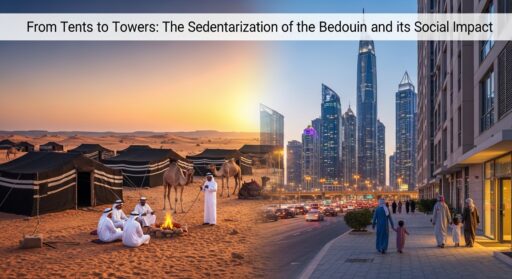
The era of large-scale seasonal migration ended with the discovery of oil, the establishment of national borders, and the provision of permanent housing and water via municipal systems. However, its legacy is profoundly visible. The UAE’s massive investment in water security—from vast desalination plants to cloud-seeding programs—is a high-tech response to the ancient, existential challenge of water scarcity that once dictated every movement. The location of many modern cities, including Al Ain and Liwa, were historically critical oases and stopping points on these migratory routes. Furthermore, the cultural memory of movement lives on in the Emirati love for 4×4 desert camping and exploration, a modern recreational echo of the nomadic impulse.
Conclusion
“Following the rain” was more than a survival strategy; it was a philosophy of life. It represented a worldview of constant adaptation, of living in a dynamic equilibrium with a capricious environment. The end of this nomadic cycle marked the end of an era, but its imprint on the Emirati psyche is permanent. The skills, the values, and the deep, intuitive connection to the desert that were honed over countless generations of movement are a foundational part of the national heritage. They serve as a timeless reminder of a time when life moved to the ancient, elemental rhythm of the desert itself.