

Introduction
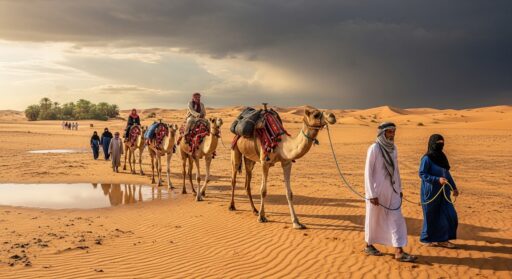
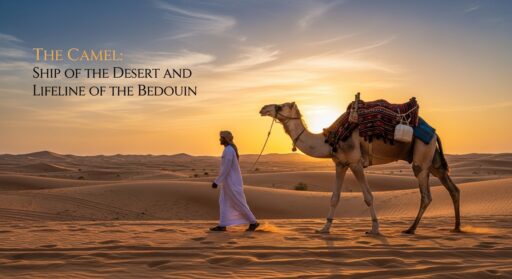
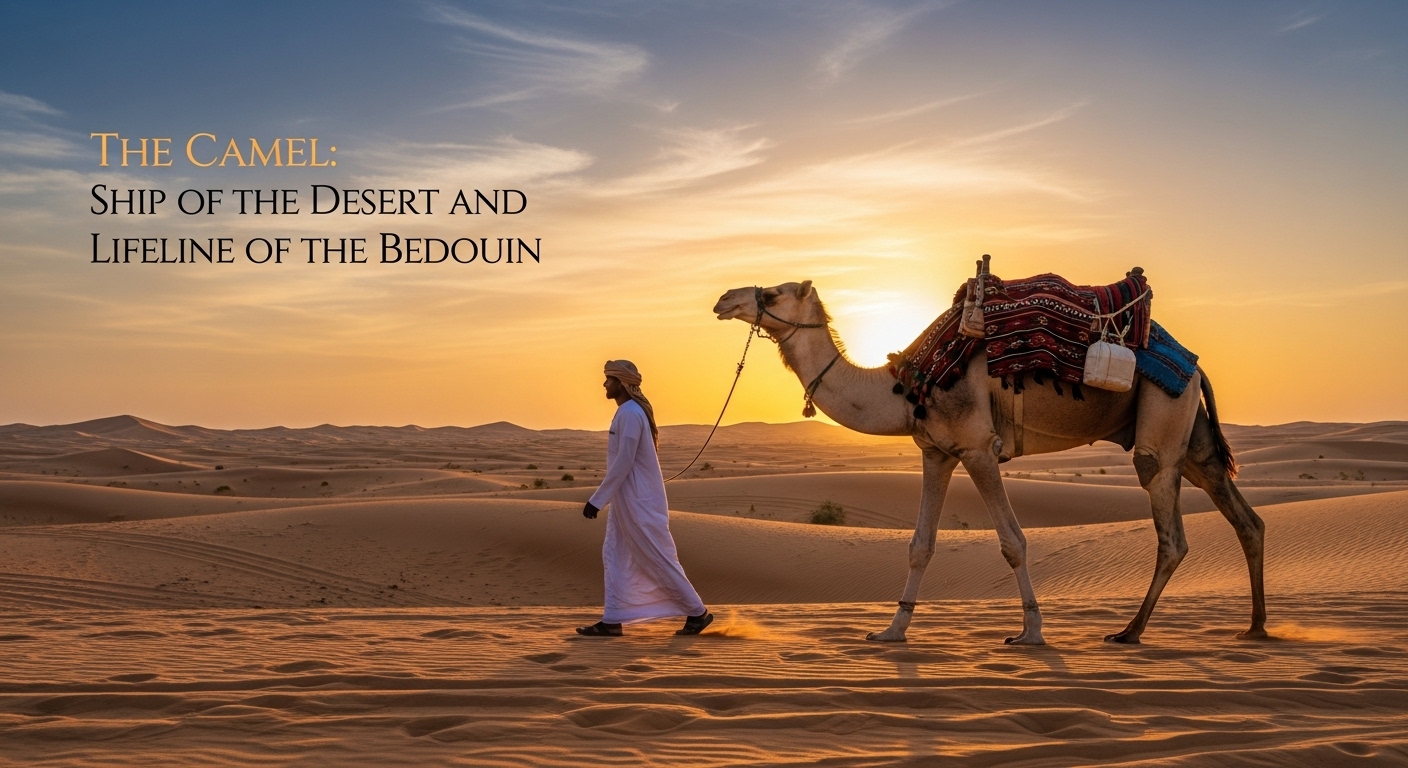
In the vast, sea-like expanse of the Arabian desert, the dromedary camel was more than just an animal; it was the ultimate survival tool, a cherished companion, and a living symbol of grace under pressure. Revered as the “Ship of the Desert,” the camel was the indispensable lifeline that made Bedouin life possible. Its unique biological adaptations and profound cultural integration meant that the history of the Bedouin is, in many ways, the history of their relationship with the camel. This bond, forged over thousands of years, represents one of the most successful and enduring partnerships between humans and animals in history.
History
Camels were domesticated in the Arabian Peninsula around 3,000 years ago, an event that revolutionized human mobility and trade in the region. It allowed for the establishment of long-distance trade routes, such as the famed Incense Route, and enabled the deep desert exploration that defined Bedouin culture. The camel’s ability to carry heavy loads over vast distances without water made it the primary beast of burden, while its meat, milk, and hair provided essential sustenance and material for shelter and clothing. A tribe’s wealth and status were measured not in money, but in the size and quality of its camel herds. This deep interdependence lasted until the mid-20th century, when the advent of the automobile began to erode the camel’s practical centrality.
Key Features
The camel’s value stemmed from a suite of remarkable adaptations and uses:
- Biological Marvel: Camels could survive for up to two weeks without water and could lose up to 25% of their body weight through dehydration without suffering. Their hump stored fat, not water, which could be metabolized for energy and water. Their thick eyelashes, closable nostrils, and wide, padded feet were perfect for desert travel.
- A Mobile Provision Store: Camels provided a constant source of nutrition. Their milk was a staple food, rich and nutritious. Their meat was consumed on special occasions, and their hair was shorn annually to weave the iconic black tents (bait al-sha’ar) and other textiles.
- Transport and Warfare: As a mount, the camel allowed for rapid movement across the desert, crucial for both trade caravans and tribal warfare. The development of the camel saddle was a key technological innovation that enhanced its utility in both travel and battle.
- Cultural Currency: Camels were the primary unit of wealth and the standard currency for paying dowries (mahr), settling blood debts (diyah), and sealing political alliances.
Cultural Significance
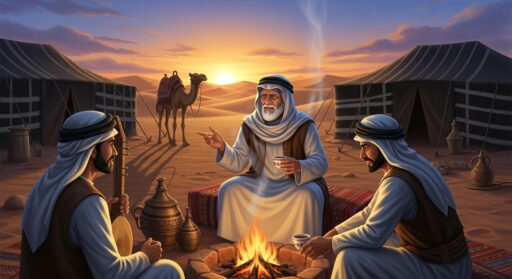
The camel was woven into the very fabric of Bedouin poetry, language, and identity. Hundreds of words in Arabic describe camels in different states of health, age, and color, reflecting their deep cultural importance. They were a common subject in nabati poetry, often used as metaphors for beauty, endurance, and journey. The camel was a symbol of patience, resilience, and generosity—values central to the Bedouin code of honor. A man’s reputation could be tied to how well he treated his camels, and the act of slaughtering a camel to feed a guest was the ultimate expression of hospitality.
Modern Relevance
While the camel’s role as a primary mode of transport has ended, its cultural significance has not diminished; it has transformed. Today, the camel is a powerful national symbol of the UAE’s heritage, featured prominently on the emblem of the nation’s Central Bank. Camel racing has evolved from a traditional pastime into a multi-million-dollar professional sport, with state-of-the-art tracks and robotic jockeys, preserving the breed’s competitive spirit. Camel beauty pageants (mazayna) are hugely popular events where thousands of camels are judged on their breed, posture, and head shape, celebrating the enduring bond between Emiratis and their “ships of the desert.” Furthermore, camel milk is now commercially produced and valued for its health benefits, and camel-based tourism offers visitors a glimpse into this foundational aspect of Emirati culture.
Conclusion
The story of the camel is the story of the UAE’s soul. It is the living bridge between a challenging past and a prosperous present. From carrying weary travelers across the dunes to thundering down modern racetracks, the camel has adapted alongside the nation it helped sustain. It remains a cherished, non-negotiable part of the national identity—a daily, living reminder of the endurance, resourcefulness, and deep connection to the land that allowed a civilization to not just survive, but to thrive, in one of the most demanding environments on Earth.